Practical Guide
Uzbekistan Visa Regulations in 2026
Uzbekistan today is one of the easiest countries in Asia to enter. Citizens of more than 90 states — including the entire EU, the United Kingdom, Japan, South Korea, Turkey, the UAE, Saudi Arabia, Canada and Australia — travel visa-free for up to 30 days. All you need is a passport valid for at least three months beyond your stay.
Travelers from roughly 55 further countries, including the USA, China, India and South Africa, use the official e-visa portal (e-visa.gov.uz): a five-minute online form, a fee of about US$20, and the visa arrives by email within two working days.
Hotel registration — once the traveler’s headache of the region — is now automatic: every licensed hotel registers you electronically at check-in. If you stay in private apartments, registration must be arranged separately, which is exactly the kind of detail our team handles for every guest.
Getting Here
International Flights to Uzbekistan
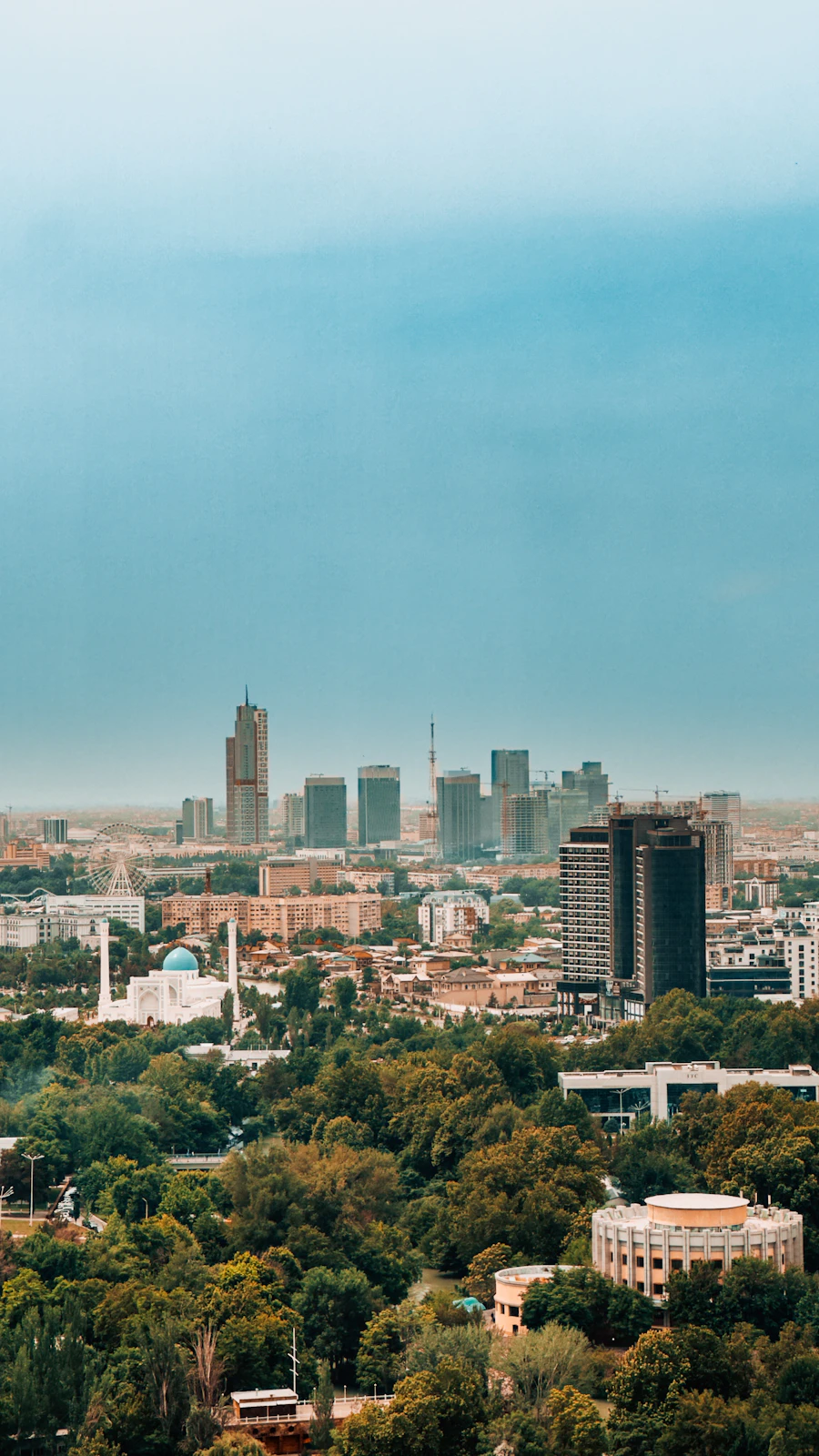
Tashkent International Airport (TAS) is Central Asia’s busiest hub, with direct links to over 50 cities. Key gateways from Europe are Istanbul (multiple daily flights with Turkish Airlines and Uzbekistan Airways), Frankfurt, Paris, London and Rome; from the Gulf, Dubai (flydubai/Emirates), Doha (Qatar Airways), Abu Dhabi and Jeddah; from Asia, Seoul, Tokyo, Beijing, Delhi and Kuala Lumpur. Uzbekistan Airways even flies non-stop to New York.
Samarkand, Bukhara, Urgench, Fergana and Namangan also receive international flights — useful for open-jaw itineraries that start in one city and end in another, a routing we build often for our guests.
Tip: book Istanbul or Gulf connections for the best fares; national holidays (Navruz in March, Independence Day in September) sell out early.
Before You Go
5 Things to Know Before Traveling to Uzbekistan
1 · Cash still matters. Cards (Visa/Mastercard) work in hotels and city restaurants, but bazaars and small towns run on cash. ATMs are everywhere in cities; bring crisp USD or EUR notes as backup.
2 · Trains sell out. The Afrosiyob high-speed train is the best way between cities — and the most in-demand. Book seats as soon as your dates are fixed (we do this for all our guests).
3 · Dress is relaxed, but respectful. Uzbekistan is secular and welcoming; for mosques and mausoleums, shoulders and knees covered is appreciated.
4 · Taxis are app-based. Yandex Go works like Uber and is very affordable. Agree the price first in unofficial taxis.
5 · Hospitality is real. Being invited for tea is normal, not a sales trick. Accept at least one invitation — it will be a highlight of your trip.
Culture
The Languages of Uzbekistan
Uzbek, a Turkic language written in Latin script, is the state language and the mother tongue of most of the population. Russian remains the lingua franca of business and older generations, and is universally understood in cities. In Samarkand and Bukhara you will also hear Tajik (a Persian language) on the streets.
English is spreading fast — most young people in tourism speak it well, and all our guides are fluent. Learn three words and doors open everywhere: Rahmat (thank you), Salom (hello), Xayr (goodbye).
Culture
Uzbek Culture: Hospitality as a Way of Life
Uzbek culture rests on three pillars: mehmondo‘stlik (hospitality), the mahalla (neighborhood community) and respect for elders. A guest is considered a blessing on the house — expect to be seated at the place of honor and offered the best of everything.
Tea is the national ritual: green tea (ko‘k choy) poured three times back into the pot before serving, always offered first. The bread — non — is sacred: never placed upside down, never thrown away.
Craft traditions run deep: suzani embroidery, Rishtan ceramics, Margilan ikat silk and Bukhara gold-thread work are living arts, passed within families for generations — and the best souvenirs you can bring home.
Food
Uzbek Cuisine: More Than Just Plov
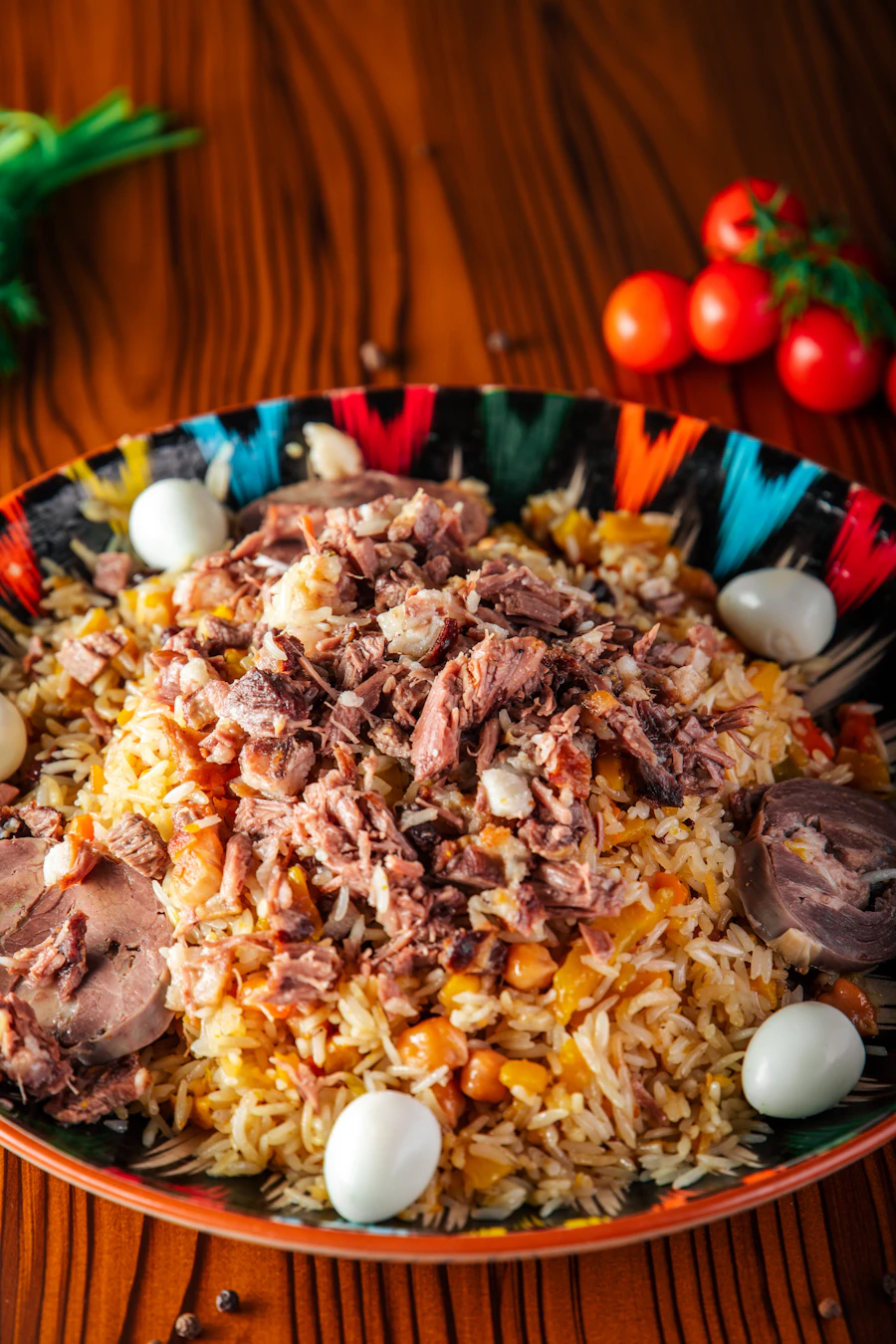
Plov (osh) is the king — rice slow-cooked in a cast-iron kazan with lamb, yellow carrots and cumin. Every region has its own school; in Tashkent, the Central Asian Plov Centre cooks it in vats for a thousand people before noon. Come hungry, come early.
Beyond plov: samsa baked on tandoor walls, hand-pulled lagman noodles, manti dumplings, shashlik over coals and shivit oshi — Khiva’s emerald dill noodles. Vegetarians manage well with fresh salads, pumpkin manti and the year-round abundance of the bazaars.
Melons deserve their own paragraph: Uzbek melons and pomegranates, sweetest in late summer and autumn, have been praised by travelers since Marco Polo.
Heritage
Uzbekistan’s Architecture: Reading the Blue Cities
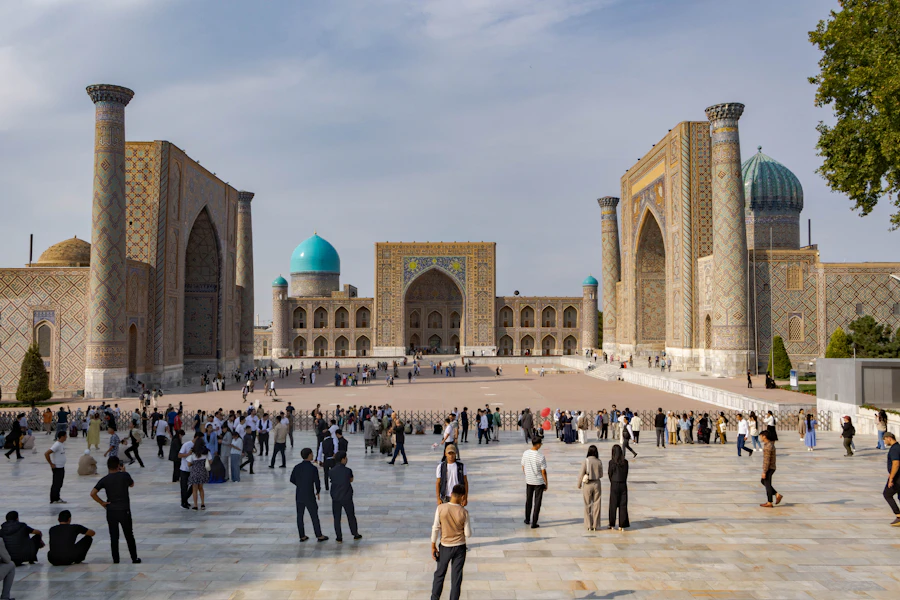
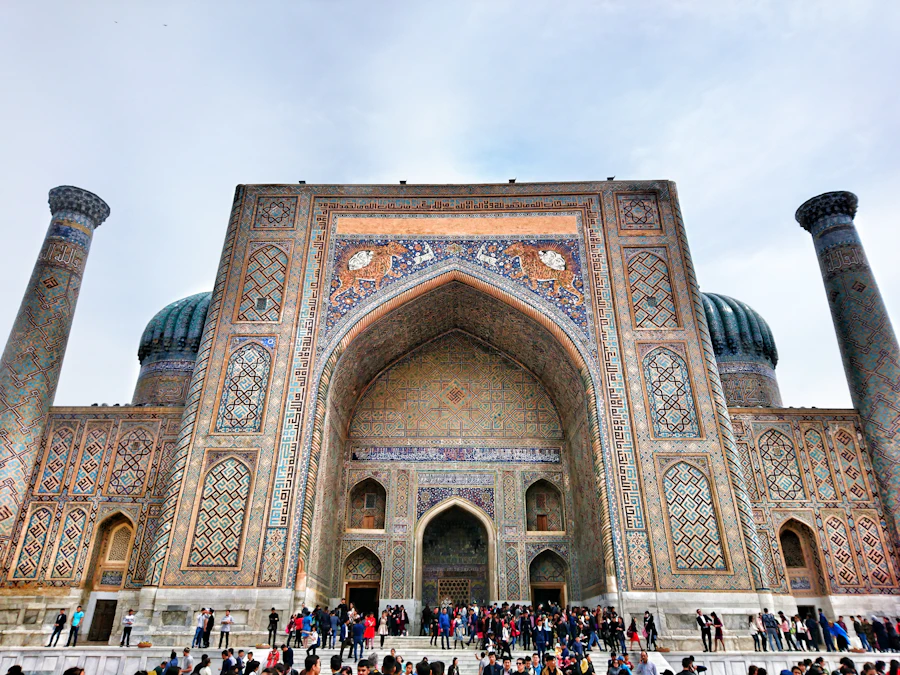
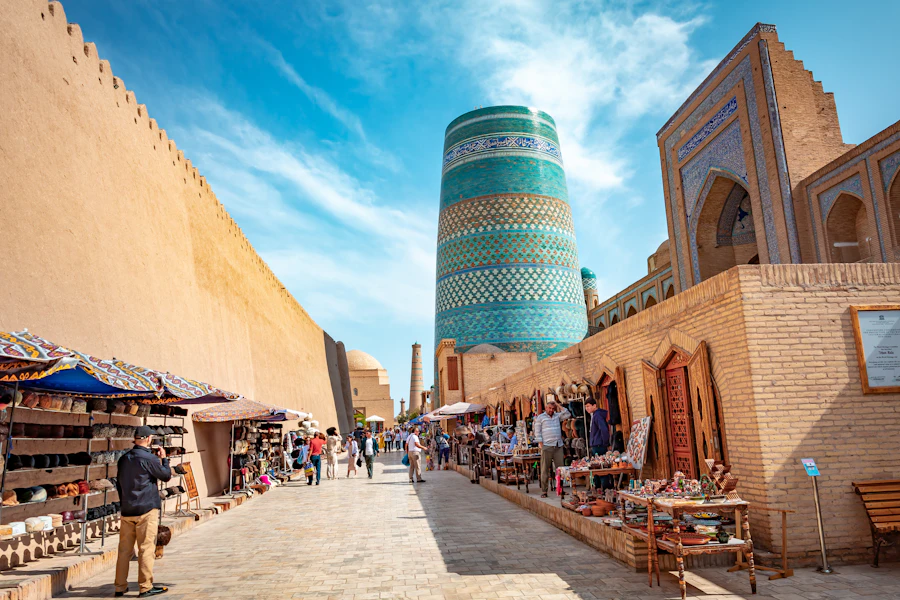
The skyline of Samarkand, Bukhara and Khiva is a textbook of Islamic architecture: the madrasah (Quranic college) with its monumental pishtaq portal, the minaret calling across the desert, the turquoise dome engineered to shimmer against the sky, and the mausoleum housing saints and conquerors.
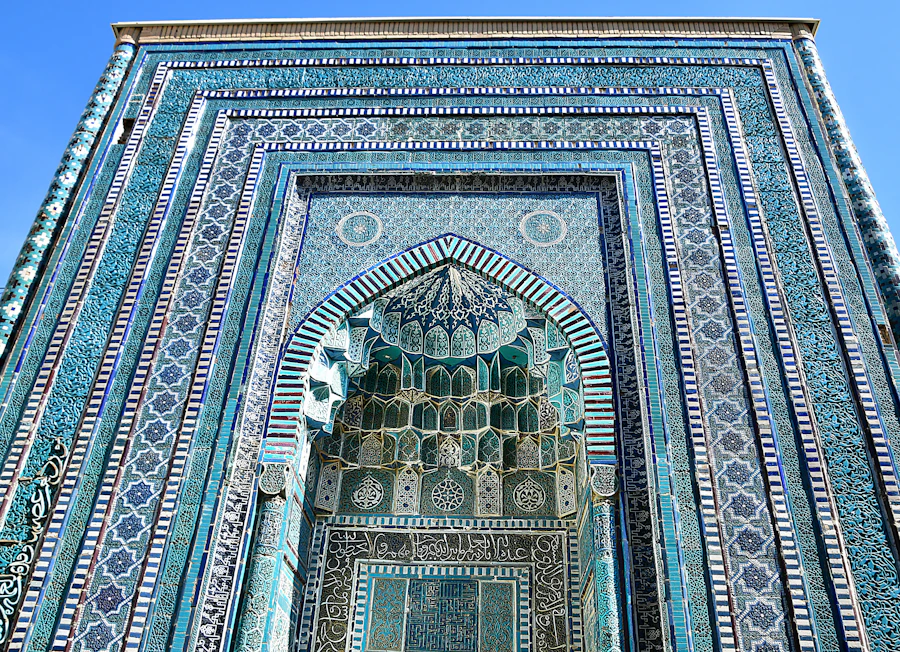
The blue is no accident — glazed majolica in seven shades, perfected by Timurid masters in the 14th–15th centuries, when Timur gathered the best craftsmen of the conquered world in Samarkand. Look closely: the geometric girih patterns encode infinite continuation, while Kufic calligraphy weaves the name of God into brick itself.
Heritage
A Short History of Uzbekistan
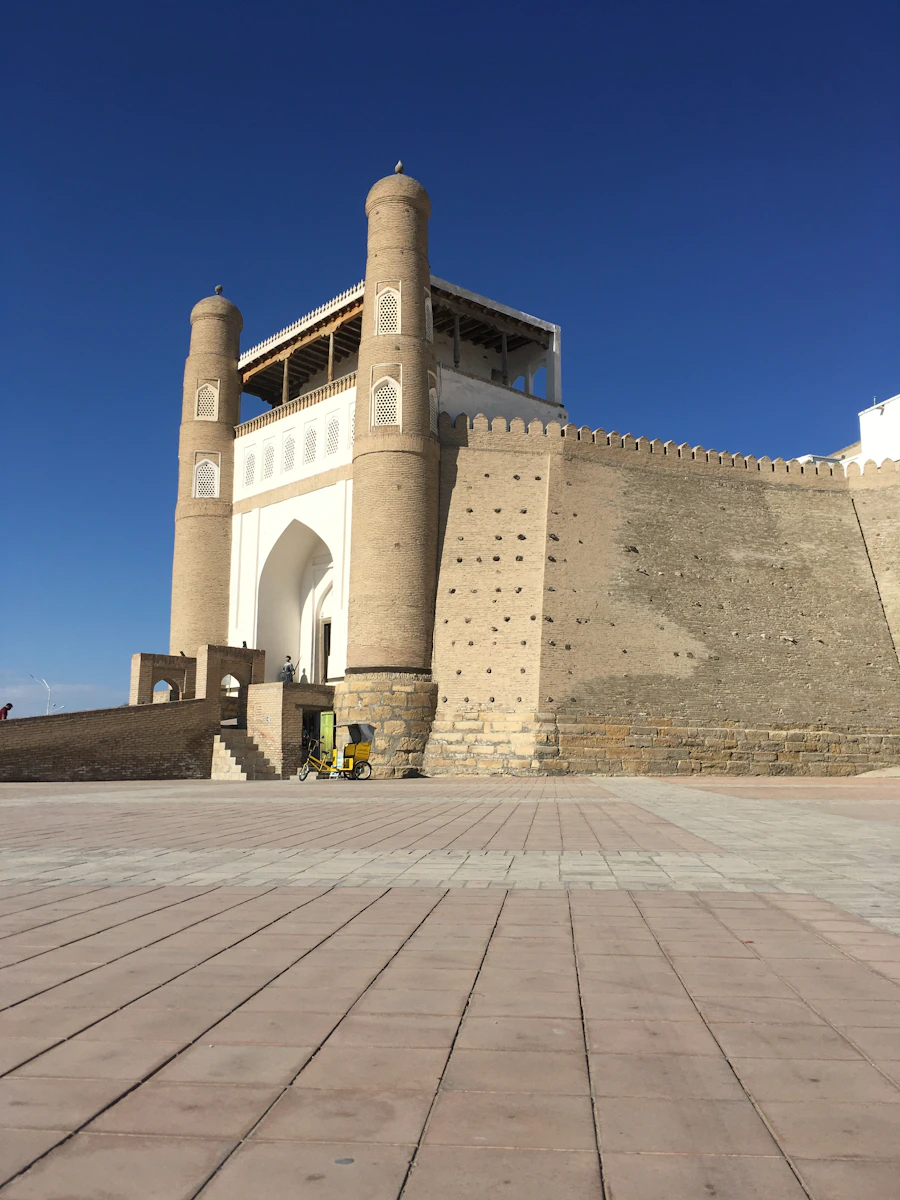
Everything here begins with the Silk Road. Sogdian merchants carried silk, paper and ideas through Samarkand and Bukhara for a thousand years; Alexander the Great married Roxana in these lands; Islam arrived in the 8th century and made Bukhara "the dome of faith of the East".
The 14th century belongs to Amir Timur (Tamerlane), who made Samarkand the capital of an empire stretching from Delhi to Damascus — his grandson Ulugbek measured the stars from his observatory with astonishing precision.
After the khanates of Bukhara, Khiva and Kokand came the Russian and Soviet centuries, and in 1991 — independence. Today’s Uzbekistan is young, fast-opening and proud of every layer of this history: exactly what makes it such a rewarding place to travel.
More Topics
Explore Uzbekistan Deeper
Silk RoadThe Great Silk Road Legacy
Caravans, caravanserais and the cities that grew rich on silk and paper — why Uzbekistan is the road’s beating heart.
SamarkandSamarkand’s Architectural Wonders
Registan, Bibi-Khanym, Gur-e-Amir: how Timur’s capital became the showcase of the Islamic world.
BukharaBukhara’s Living Historic Center
140+ protected monuments where people still live, trade and pray — a city-museum without the museum feeling.
KhivaKhiva and the Walled City of Itchan Kala
Inside the mud-brick walls of the world’s best-preserved oasis city on the old slave-caravan route.
FoodUzbek Cuisine and Plov Culture
UNESCO-listed plov culture: one dish, a hundred regional schools, and the etiquette of the shared platter.
TashkentTashkent: History Meets Modernity
Soviet modernism, the deepest metro art east of Moscow and a booming café scene — the capital in a day.
HistoryThe Legacy of Amir Timur
Conqueror, builder, chess player: separating the myth of Tamerlane from the ruler who shaped a region.
CraftsSilk and Ceramic Craftsmanship
From Margilan’s ikat looms to Rishtan’s cobalt glaze — meeting the masters who keep the Silk Road’s crafts alive.
NatureThe Aral Sea and Moynaq
Ships rusting in a desert that was once the world’s fourth-largest lake — dark tourism with a powerful story.
FerganaThe Fergana Valley
Uzbekistan’s garden: silk, ceramics, horses and the warmest bazaars, two hours from Tashkent by train.
PracticalModern Travel & Transport Logistics
High-speed trains, domestic flights and border crossings — how to move around Central Asia efficiently.
PracticalVisa Policies and Entry Requirements
Who needs what in 2026: visa-free lists, e-visa steps and registration rules, updated.
CultureLocal Etiquette and Cultural Norms
Tea rituals, bread rules, mosque manners and bargaining — small gestures that earn big smiles.
PlanningBest Time to Visit & Climate
Two golden windows — April–June and September–October — and what each season really feels like.
PracticalCurrency, ATMs and Payments
The som, cash culture, card acceptance and exchange tips without the myths.
CultureThe Language Landscape
Uzbek, Russian, Tajik and fast-growing English — what to expect and phrases that open doors.
NatureNature and Ecotourism Beyond Cities
Chimgan peaks, Aydarkul’s desert lake, Zaamin’s junipers and Nuratau homestays.
ScienceThe Sun Heliocomplex (Institute of the Sun)
One of only two giant solar furnaces on Earth hides in the hills near Tashkent — and you can visit.
PracticalSafety and Solo Travel
Why Uzbekistan ranks among Asia’s safest destinations — including for solo female travelers.
CultureTraditional Festivals and Celebrations
Navruz sumalak stirred all night, harvest fairs and wedding seasons — timing your trip to the culture.